The history behind Brickwalk Village.
Brickwalk Village wasn't built from the ground up — it was assembled, piece by piece, from some of Farmington's oldest structures. When a mid-century car dealership threatened to demolish a handful of historic buildings across the avenue, a local doctor stepped in and gave each one a second life.
The Daniel Curtiss House is built
The oldest structure in the collection rises on Farmington's Town Street. Generations later it would serve as the town's Tunxis Library before beginning a new life on Brickwalk Lane.
Master builder Judah Woodruff raises a house at the corner
Maj. Peter Curtis — a Farmington blacksmith who served under George Washington in every battle the general commanded — commissions a new house at Farmington Avenue and High Street, replacing an earlier home on the site.
The North District Schoolhouse is built
One of twelve school districts established across Farmington, the North District schoolhouse teaches generations of village children for nearly a century.
The Curtis House becomes a tavern
Sold to William Whitman, the old Curtis homestead reopens as Whitman's Tavern, complete with a ballroom on the second floor — a village gathering place for generations.
Dr. Walls W. Bunnell enters the story
The Scranton-born, Yale-educated physician acquires the old tavern house and relocates it to 4 High Street — the first move in what would become a decades-long preservation effort.
A village is rescued and reassembled
When an expanding car dealership threatens to raze the historic buildings across Farmington Avenue, Dr. Bunnell steps in — moving the North District Schoolhouse, its lean-to, the Curtiss House, and the centuries-old Mark Root House one by one to a new lane he names Brickwalk.
Brickwalk Lane opens
The relocated buildings, joined by a few new storefronts, open as a working shopping village — its walkways paved with brick reclaimed from Farmington's old Town Clerk's building, giving the lane its name.
Brickwalk Village carries the story forward
The same historic storefronts that Dr. Bunnell saved now anchor a reimagined village — pairing that preserved character with new residences for a new generation of village life.
The structures behind the story.
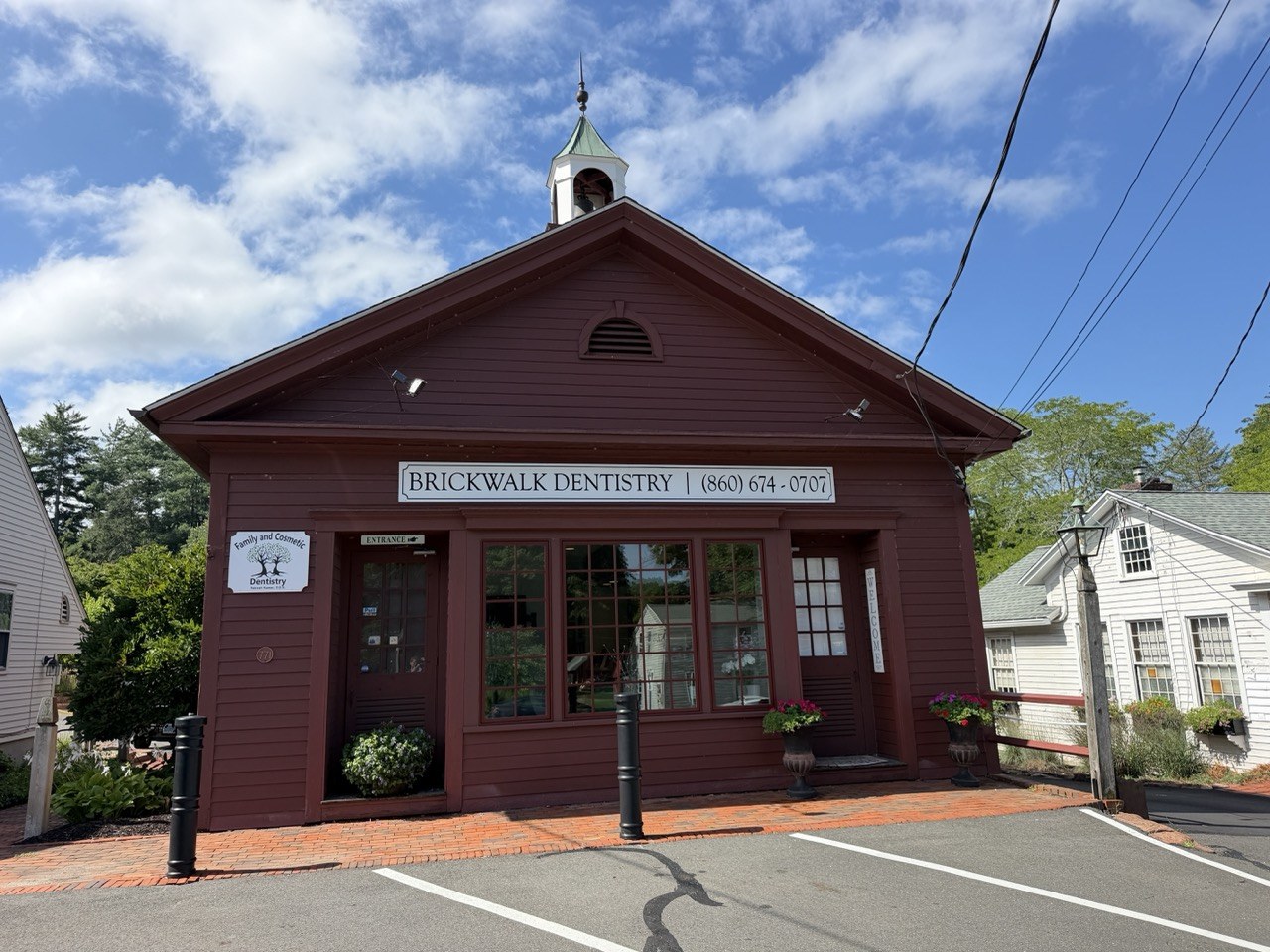
The North District Schoolhouse
Built around 1798 as one of twelve district schoolhouses established across Farmington, this building taught village children for nearly a century before Dr. Bunnell relocated it here in the 1950s.
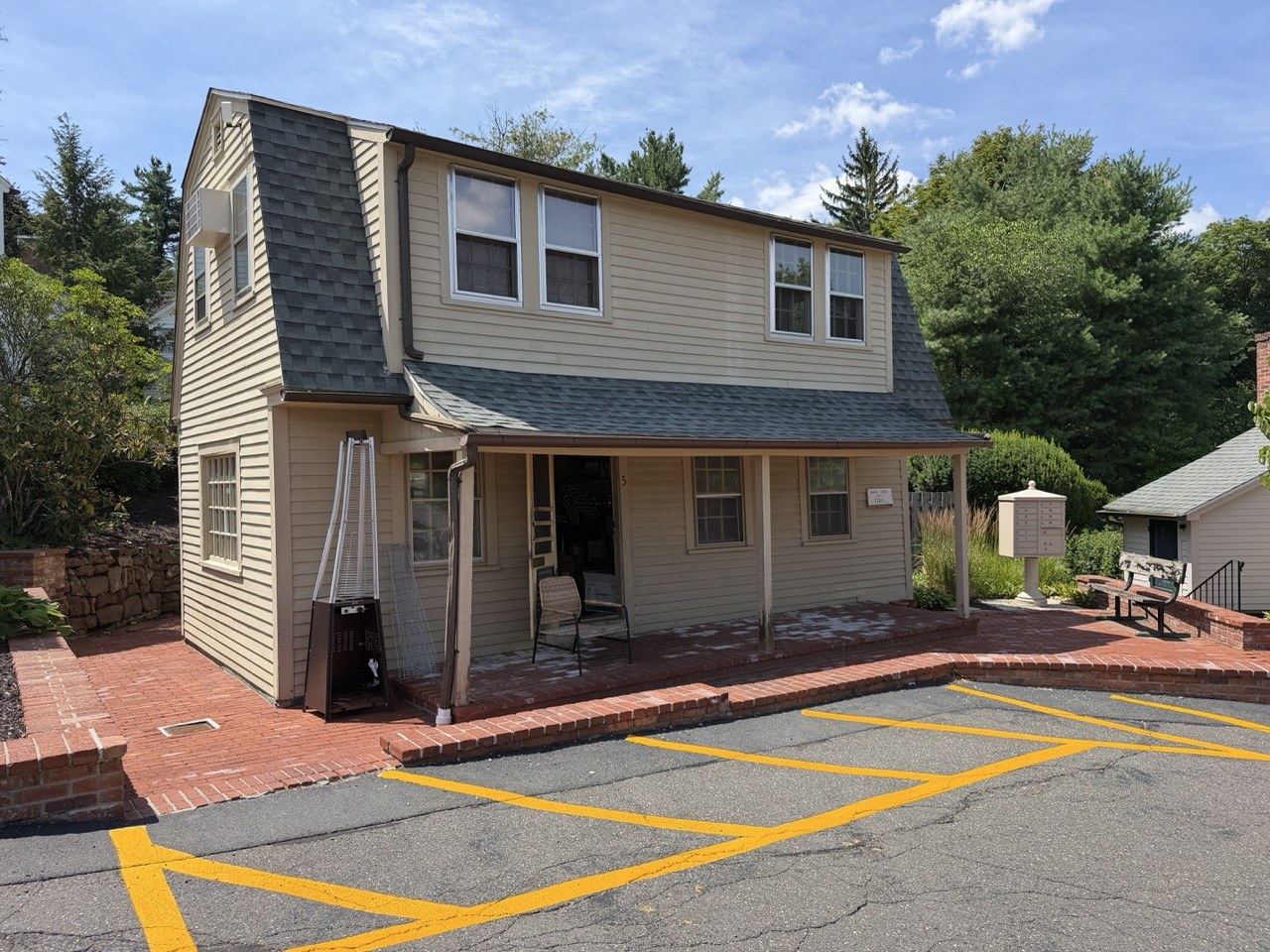
The Daniel Curtiss House
The oldest building in the village, raised around 1752. It later served as Farmington's Tunxis Library before being moved to Brickwalk Lane.
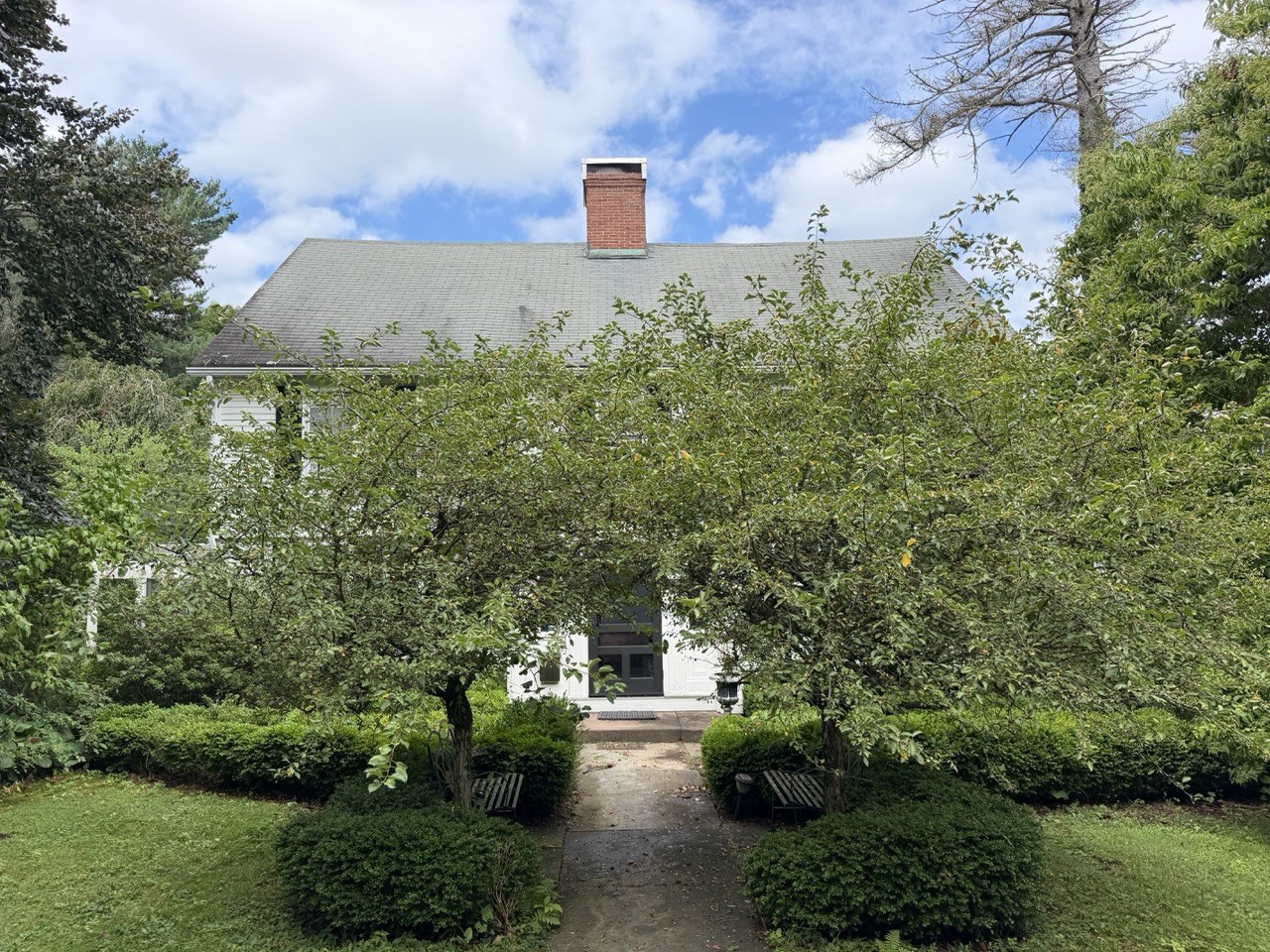
The Peter Curtis House / Whitman's Tavern
Built in 1786 by master craftsman Judah Woodruff for Maj. Peter Curtis, a Farmington blacksmith who served under George Washington. The house later became Whitman's Tavern, complete with a second-floor ballroom, before Dr. Bunnell moved it to High Street in 1938.
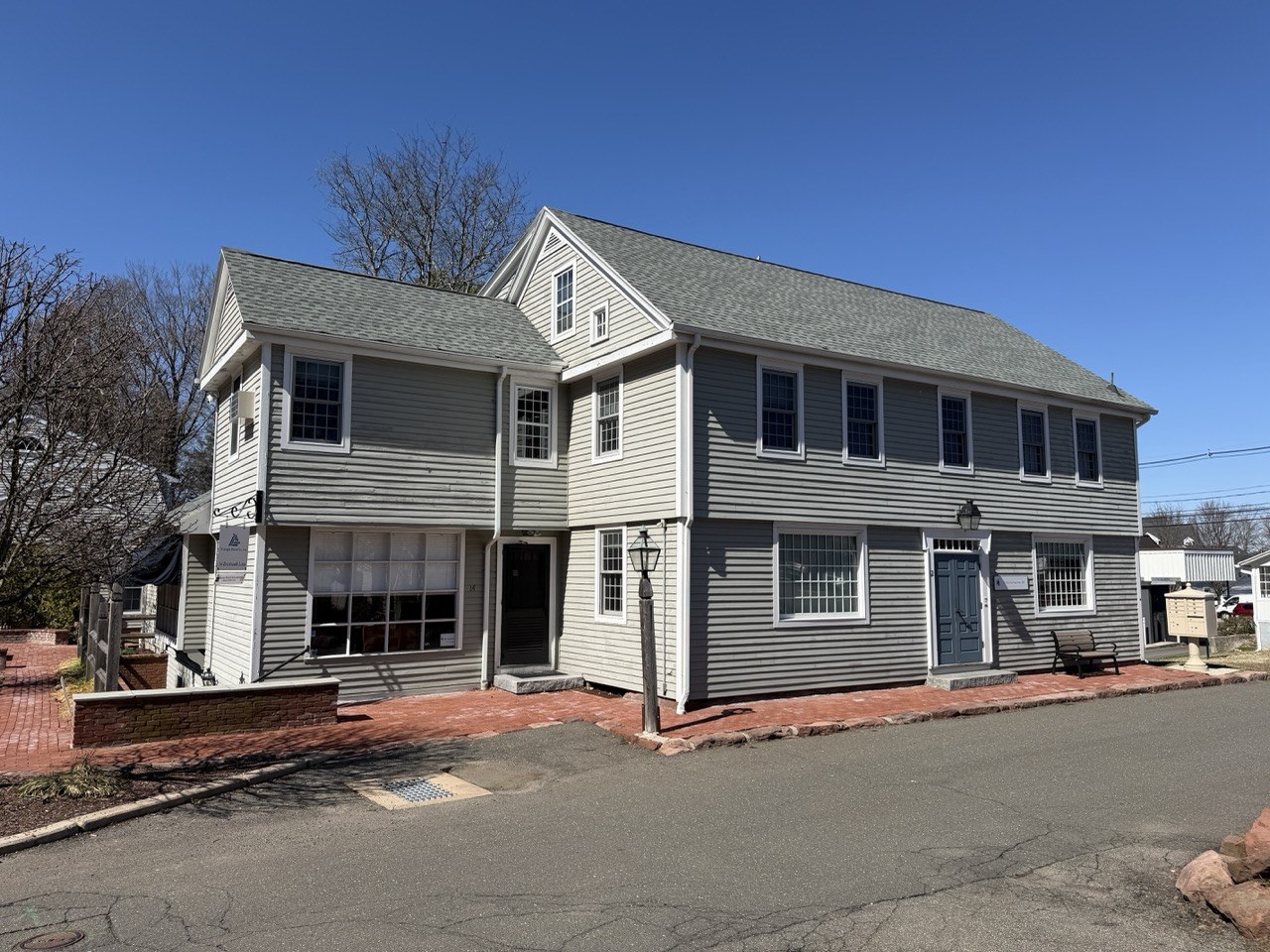
The Mark Root House
The only center-chimney, colonial-period house in the complex, originally standing on Meadow Road facing south. It was moved to the village to round out the collection of relocated homes.
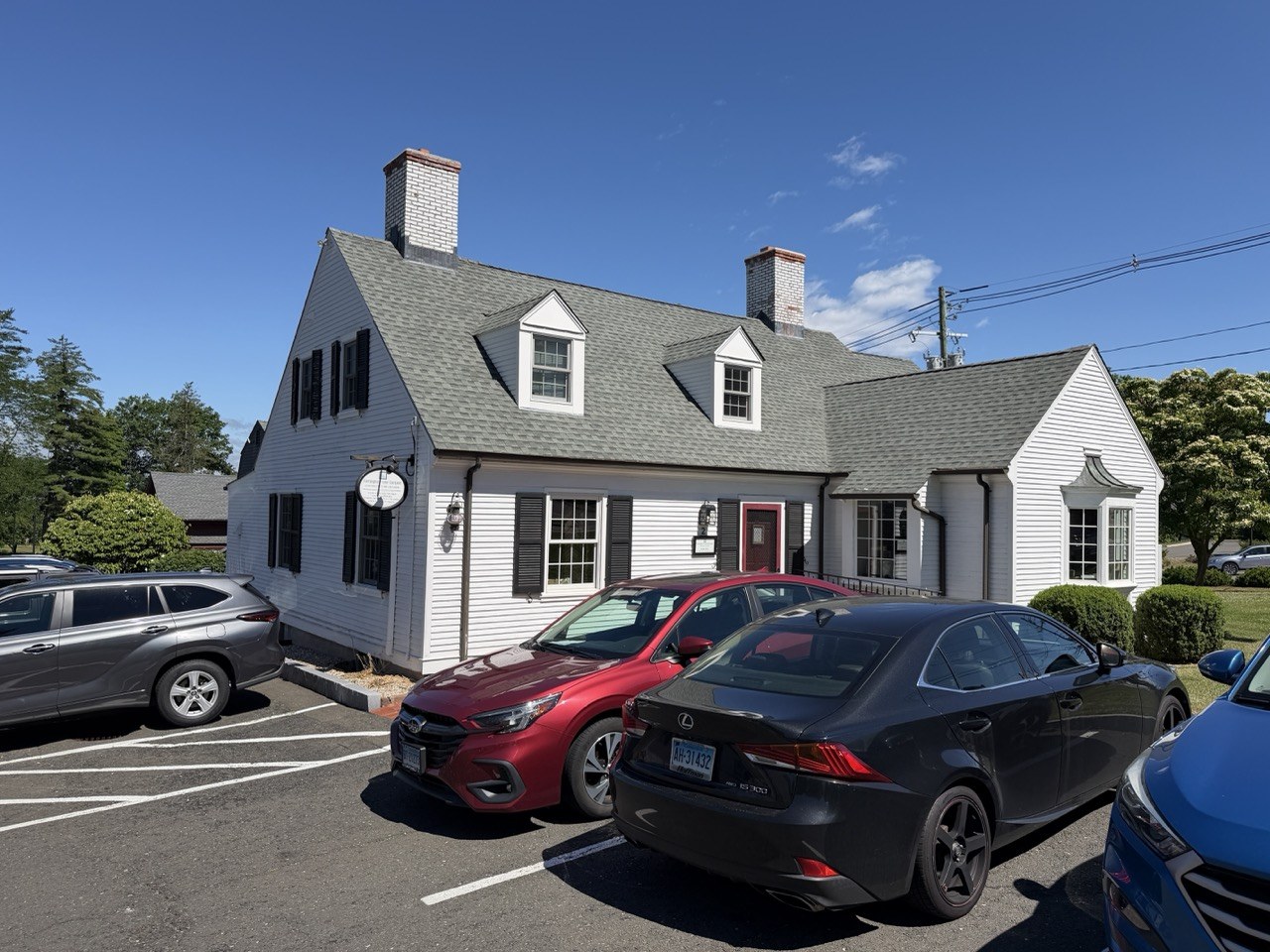
The Bunnell Medical Office
Built new around 1935–36 for Dr. Bunnell's own medical practice, this building anchors the corner of the complex and now houses offices.
The Ann Howard Cookery
One of two buildings Dr. Bunnell built new in 1956 to complete the complex, rounding out the storefronts along Farmington Avenue.
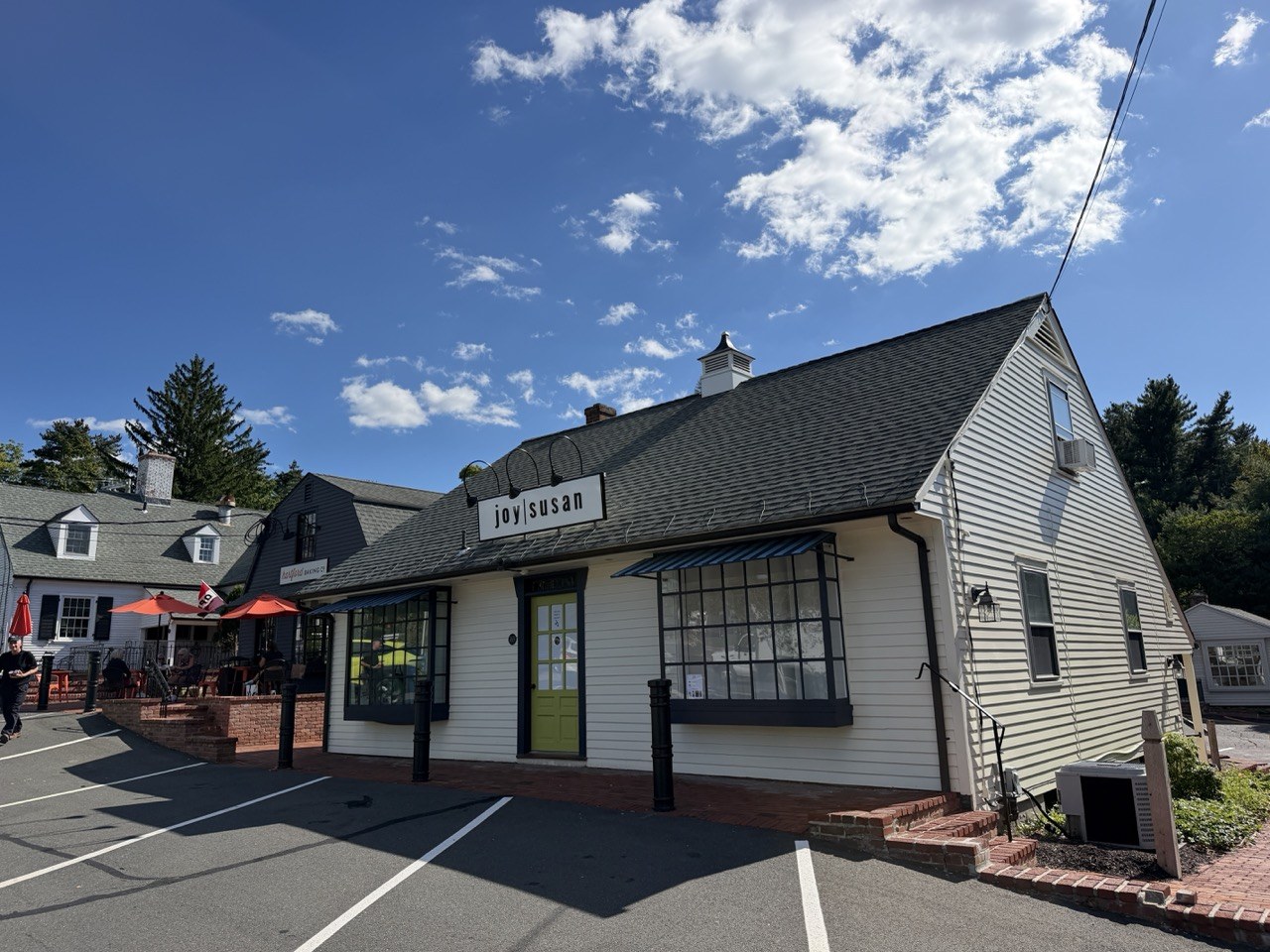
The Village Storefront
Another of the storefronts added to round out Brickwalk Lane's Farmington Avenue frontage, today home to joy | susan. Built in 1956 by Dr. Bunnell.
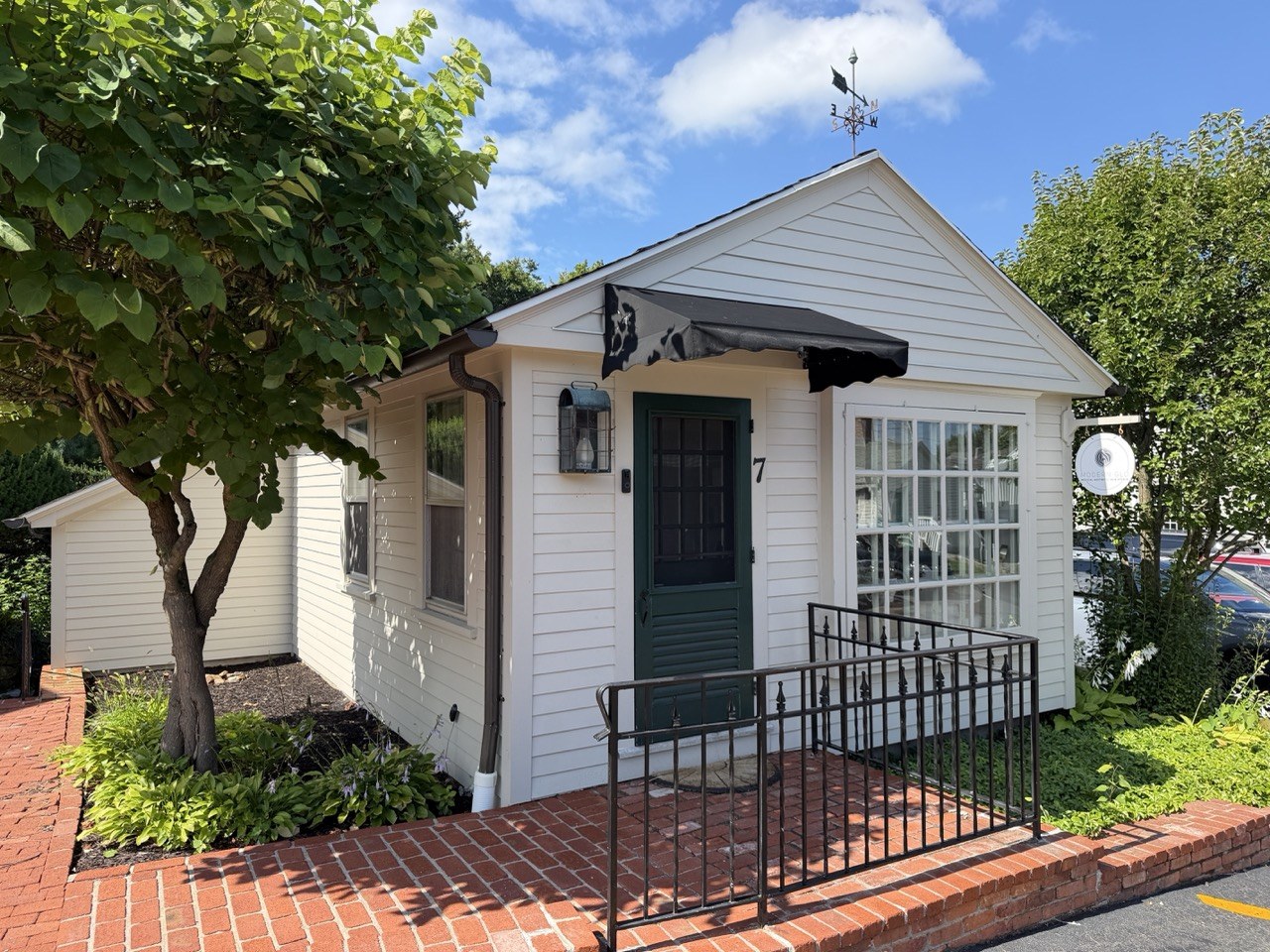
The Schoolhouse Lean-To
Originally a lean-to attached to the North District Schoolhouse, built in 1793. Converted into a residence around 1850, then moved from across the street to its current spot on Brickwalk Lane in 1956.
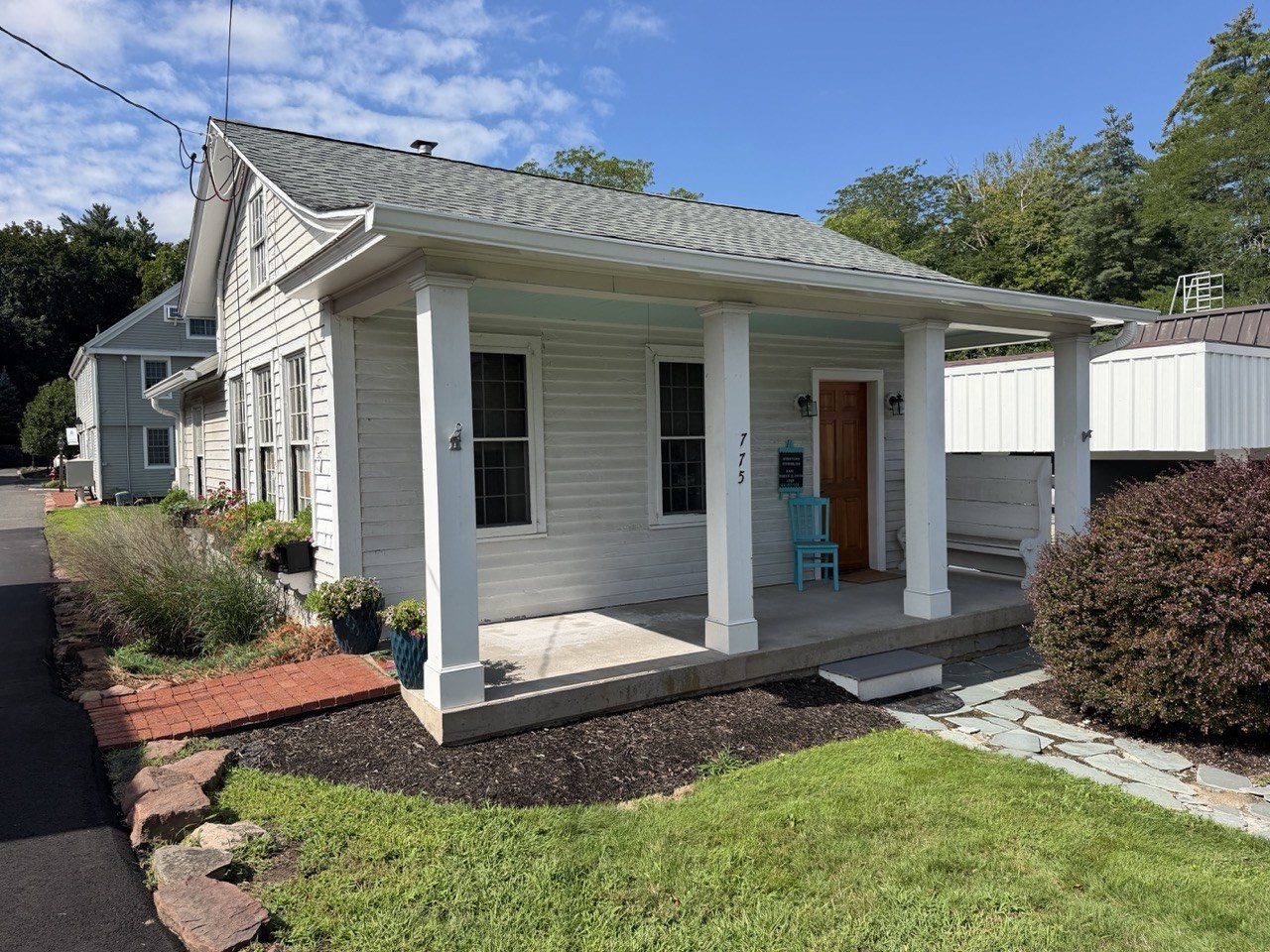
The Curtis Woodshed
Originally a woodshed attached to Maj. Peter Curtis's home, built in 1786. Dr. Bunnell converted it into a playhouse for his children in 1938, and it received a back-end extension in 1953.
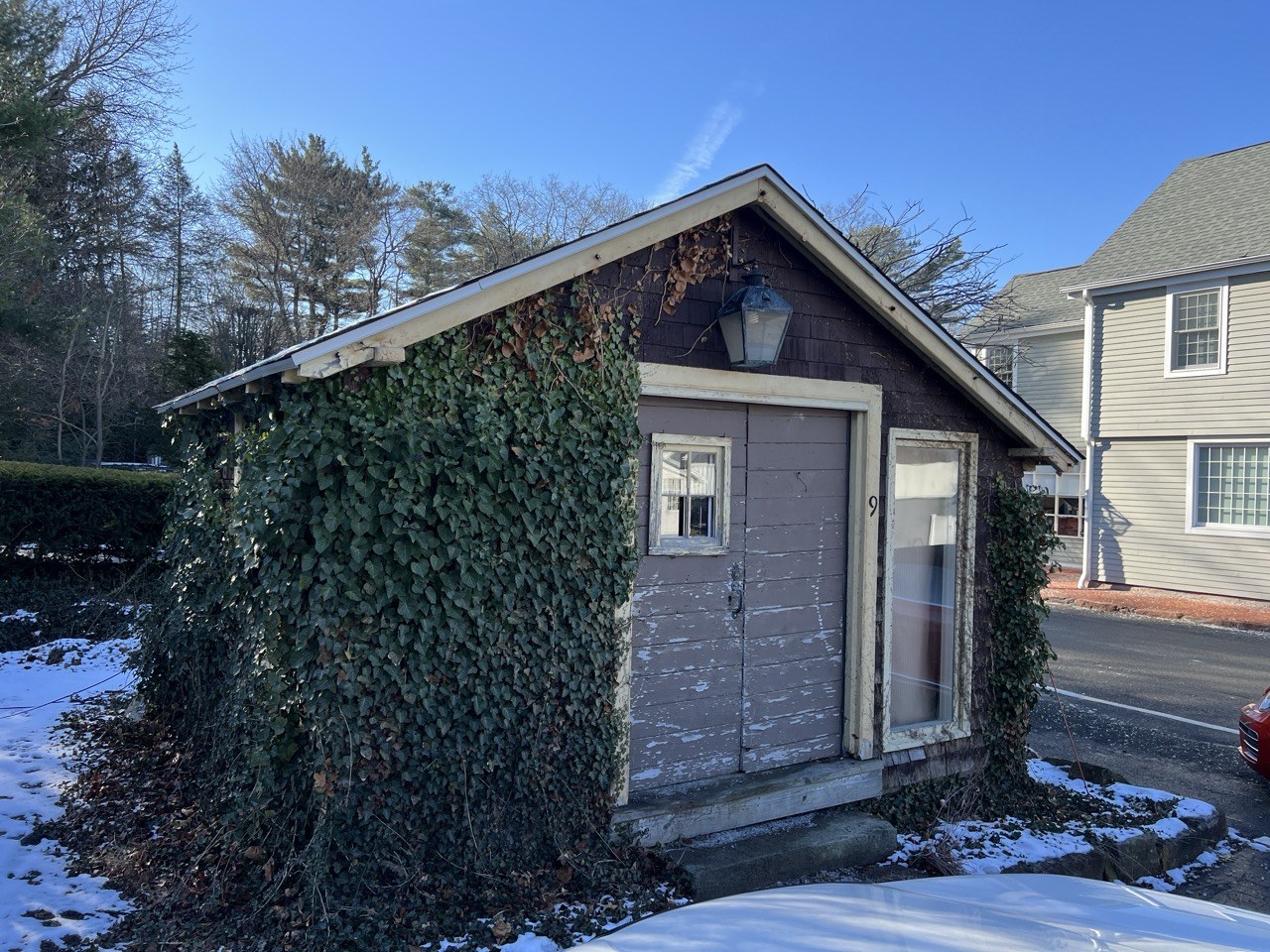
The Barney Estate Wood Shed
A wood shed from the Barney Estate, built around 1800, moved to its current spot on Brickwalk Lane in 1960.
Historical research drawn from the Connecticut Historical Commission's Historic Resources Inventory for the Brickwalk Lane Complex and local Farmington property records.